Online Curriculum · 200hr Ashtanga Training
History and Philosophy
A deep look into the nature of yoga and life, and a doorway into the scholars of Mysore.
This part of the program is a deep look into the nature of yoga and life. Here I share the ideas that have shaped my own practice and teaching, and prepare you to study the Mysore Yoga Traditions Archive, where you will sit with the great scholars of Mysore. If you absorb this material, you will come away with a clear understanding of Indian philosophy.
The Path
The Eight Limbs
Patañjali described yoga as a path of eight limbs, aṣṭāṅga, which is where this practice takes its name. Each limb supports the next, leading from the way we live in the world to the deepest states of absorption.
- 01YamaExternal disciplines
- 02NiyamaInternal disciplines
- 03ĀsanaPostures
- 04PrāṇāyāmaBreathing exercises
- 05PratyāhāraWithdrawing the senses from their objects
- 06DhāraṇāConcentration
- 07DhyānaMeditation
- 08SamādhiAbsorption
Where the Path Begins
Yama and Niyama
The first two limbs, the yamas and niyamas, are the rules of the road. You will hear them referred to again and again. By the end of the program you will be expected to know them by heart, and to explain them to Dr. Alwar in your final examination. Study them carefully, and practise them on a personal level, not only as ideas but as a way of living.
Yama
External disciplines
- Ahiṃsā
- Harmlessness
- Satya
- Truthfulness
- Asteya
- Non-stealing
- Brahmacarya
- Continence
- Aparigraha
- Non-possessiveness
Niyama
Internal disciplines
- Śauca
- Cleanliness
- Santoṣa
- Contentment
- Tapas
- Austerity
- Svādhyāya
- Self study
- Īśvara praṇidhāna
- Devotion to the divine
Your Teachers
The Scholars of Mysore
Now that you have heard something of what little I know, it is time to meet my teachers and go deeper. Begin with the film Mysore Yoga Traditions, a summary of many speakers and points of view. Then enter the Archive, where you will hear more detailed explanations and ideas. There, in a real sense, you will sit at the feet of the great scholars of Mysore and receive an education in yoga that is difficult to find anywhere else.
Access to the Archive requires a card number. Use the coupon code AshtAngaTT9 for a free one year subscription.
Special Lectures
Four Lectures on the Bhagavad Gita
These four lectures by Dr. Nagaraj Rao, one of Mysore's senior philosophers, are a powerful introduction to the philosophy nearest to the yoga tradition of Mysore. Watching them will give you a much clearer sense of the true spirit of the Bhagavad Gita.
Continue Your Study
Sit with the scholars of Mysore.
When you have absorbed this material, the Archive and the wider body of Online Studies are waiting. Take your time, and let the philosophy settle into your practice.
Physiology and healing Arts
Yoga should be a healing experience. As a practitioner and teacher you need know how to help yourself and others when difficulties arise. In this section we will deal with how to approach these issues. Therapeutic work, somatic movement, self massage, Thai Massage, and customization of asana practice will be taught here.
The video above is in more detail and ha much more information. The video below is strictly for practice and can be used to enjoy the benefits of the exercises without a lot of talking and information.
There are two categories of practices in this area of the training. The first one consists of all the things yoga practitioners can do for themselves. This is vast and infinite no doubt and it can be said that yoga as a whole fits into that category. But there is another aspect! There are many things that can be done for us by another person. Thai Massage is one of the great healing arts! I do not think that all yoga teachers need to become bodyworkers or massage therapists. But to not know anything of this kind is a drawback. People will surely come to you with issues. You should have some tools to help with. Below are videos teaching the 4 classical positions of Thai Massage. Try them on a friend! Preferably a friend who also wants to learn and who is willing to exchange work.
There is no end of techniques in bodywork! I am inspired by many disciplines. Myofascial work, chiropractic, muscle activation, and rolphing just to name a few. What I have found is that Thai is the best basket for me to put all the other tricks into. There is enough here to give you a good foundation and to teach you something that enables you to really help people and hopefully it will spark a love for healing that blossoms into many years of satisfying work!
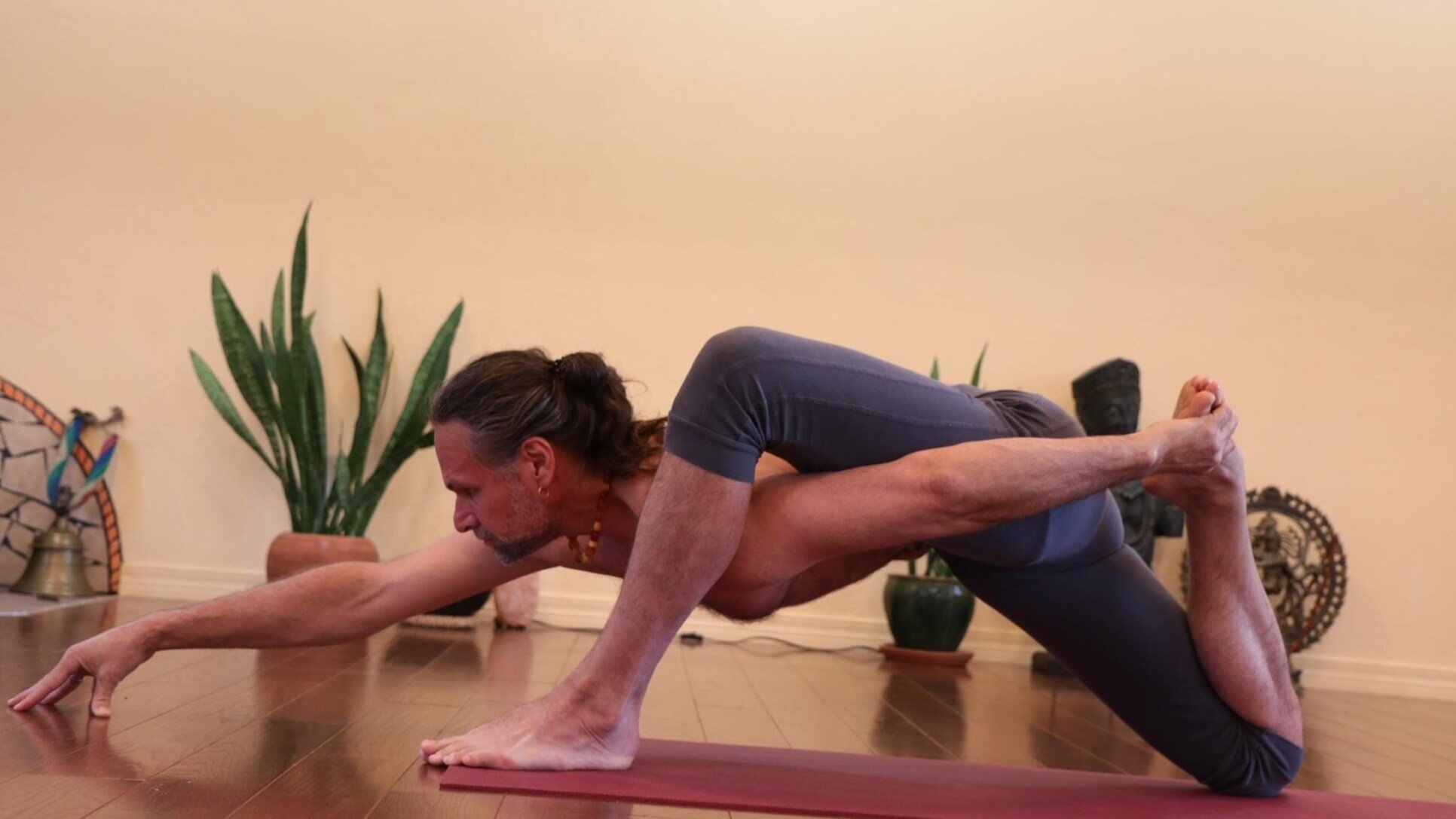
Bryce Delbridge teaches about arm balances and explores the muscle groups necessary for them. He gives step by step instructions about how to build strength for these movements and also how to use therapeutic movements/self massage to counterbalance some of the issues that can arise from this type of work.
Stay tuned for our Ayurveda Section which will be added soon!