The Philosophy of Ashtanga Yoga
Athletes are not yogis - but this is the process for an athlete to become a yogi!
Course Outline
Introduction to the Journey
Welcome. This section of the training is a sincere snapshot of my own journey into the worldview and spiritual practice of yoga. Together we will ask—and keep asking—two fundamental questions: What is yoga, really? And what is the worldview and living practice from which the yoga we do today has evolved?
What this course is (and is not)
Yoga is not whatever we want it to be. It is a clearly defined philosophical system with a precise vision of the human person, the world, and liberation. Āsana belongs to yoga, without doubt, but the heart of yoga is deeper: it is a way of seeing and a way of being. This course focuses on those foundations. If you are a sincere practitioner—and especially if you teach—this is about knowing what you are truly practicing and sharing.
Why lineage and clarity matter
The Mysore community has carried forward a living stream of traditional knowledge. The teachings you will encounter here are not a modern remix; they belong to a lineage that reaches back through the Nāthamuni Sampradāya to Ācārya Rāmānuja. You will study with scholars who speak from within that tradition. The aim is not to collect ideas but to cultivate viveka—clear discrimination—so practice becomes grounded, purposeful, and transformative.
How we will travel
Sāṅkhya: We begin with Sāṅkhya because it lays the theoretical foundation: the categories of reality, the distinction between prakṛti and puruṣa, and how bondage and freedom are understood.
Patañjali Yoga Sūtras: With that ground, we turn to the Sūtras for the method—how to purify the mind, cultivate steadiness, and move toward samādhi.
Bhagavad Gītā: Finally, we enter the text that lives closest to the Mysore heart. Here you will meet the core convictions of the tradition that Śrī Krishnamacharya transmitted—devotion, discernment, right action, and surrender woven into one path.
Your guides
• Dr. H. V. Nagaraj Rao will lead you through Sāṅkhya and the Yoga Sūtras with depth, clarity, and a disarming wit that makes demanding ideas accessible.
• Dr. M. A. Alwar—a contemporary ācārya in the Nāthamuni Sampradāya—will guide you through the Bhagavad Gītā as it is taught in his lineage. The Gītā has many interpretations; here you will receive a precise transmission that has been handed from teacher to student for centuries. You will also meet the hallmark humility of true scholarship.
How to study
• Format: Over 100 hours of video with written introductions. Watching and taking notes is the primary modality.
• Listen often: Much of the content works like a podcast. Let it play in the background; repetition will deepen comprehension.
• Relax into Indian English: If you do not understand everything at first, keep going. Your ear and heart will attune quickly.
• Read alongside: During the course, read the Bhagavad Gītā and the Patañjali Yoga Sūtras (any reputable translation is fine; Swami Satchidananda’s versions are simple and readable).
• Keep a journal: Capture questions, insights, and passages that strike you. Learning becomes stable when it is written and reflected upon.
Commitment and access
You have 12 months to complete the course. The truth is that retention—not access—is what changes us. Learn now. Hold onto what matters. Treat this as soul education—a different way of looking at life and the world—and let it reshape how you practice, teach, and live.
Using this page
This page is long by design. The order of videos and readings has been carefully arranged so each step prepares the next. Feel free to skim when needed, but do return to the sequence; it has a pedagogy baked into it. The core of the training is at the top. Once those foundations are absorbed, you will find it far easier to receive the insights of each scholar.
A personal word
I begin by introducing some of my own work to give you a sense of where we are headed. I did not have this advantage when I started; I offer it to you so that, when our scholars speak, you already have a map. Much will sound beautiful on first hearing; some will pass overhead. That is natural. This curriculum is meant to open the heart and sharpen the mind so more and more of the teaching lands.
An invitation
If you bring attention, humility, and perseverance, these months can change your practice and your life. Let the principles of Sāṅkhya clarify your vision, let Patañjali steady your mind, and let the Gītā teach you how to live. Come as you are; begin where you are. The path is well lit. Let us begin.
You have full access to all live courses happening in the MYT Online Studies Program
You are NOT obligated to take these courses but they are open to you if you choose to attend. This can give you up to three live sessions per week with an opportunity to ask questions directly to the great scholars who are the backbone of our philosophy program. To join a course simply fill out the form at the bottom and check YES where it asks if you are a member of the 200hr Intensive Training. You don’t need to submit payment.
Mysore Yoga Traditions Film gives an overview of what you are in for with this philosophy course. As Gangadhar Bhat says, “if you want to understand yoga, you have to study the WHOLE philosophy because there is cross reference.” We will to do just that! There is no getting to the bottom of Indian philosophy in one course, or even one lifetime, but we will learn about many aspects of Indian culture, thought and philosophy with brilliant scholars who have lifelong experience with the subjects they are teaching.

Sri BNS Iyengar has been my teacher of over 30 years.
At the age of 99 he is the oldest living teacher of Ashtanga Vinyasa Yoga in the world.
Guruji BNS as I call him is really the man who made all this possible. It was through him that I met the Sanskrit community of Mysore and it was because I was studying with him that they were willing to work with me. The years of work with him and the many times I was yelled at for what were considered to be irrelevant of disrespectful questions taught the manners and etiquette necessary to work with traditional Sanskrit scholars. He is a mad poet of sorts. Half joking and speaking in riddles, he taught me so much. His talks have lingered in my mind for years and taken much time to understand and fully assimilate. I brought Guruji BNS to America in 2014 and he lived with me for a month. He introduced me to many new ways of thinking. I owe this man an infinite debt of gratitude! Click the button below to find a collection of his writings so that you can understand the true genius of this great scholar.
Mysore Yoga Paramparā: What Is It?
Paramparā is a Sanskrit term meaning “that which is passed on from generation to generation.” In the eyes of the Sanskrit community of Mysore, Paramparā is less about the performance of yoga postures and more about a living tradition of spiritual practice. In our journey together, we will focus on the spiritual lineage from which Sri Krishnamacharya and other great teachers emerged. Ashtanga Vinyāsa Yoga, as it has spread worldwide, comes directly from this Mysore Yoga Paramparā.
There has been much debate among international yoga practitioners about what constitutes “traditional yoga” and what it means to be a traditional practitioner. While devotion to one’s teacher and careful adherence to the asanas as taught is certainly part of it, Paramparā encompasses much more. It reflects a broader view of life, integrating spiritual practice alongside physical practice. Paramparā should never be understood as a marketing tool or a pyramid-like structure promoting a particular style of asana—this was never its purpose.
For those wishing to engage with this great tradition beyond the mere practice of postures, listening to the elders of Mysore discuss Indian philosophy, share their perspectives on life, and explain the original purpose of asana practice is an excellent place to start. Mysore has been a center of philosophical scholarship for centuries, with a rich tradition of study and academic excellence. Many important texts were preserved and cataloged by the Royal Family of Mysore.
In this course, you will hear the great scholars of Mysore teaching Indian philosophy and its relevance to daily life. Attempting to apply these teachings in our own lives provides a tangible and meaningful connection to the Mysore Yoga Paramparā. The speakers in this course are seasoned scholars, offering profound knowledge and insights that have been cultivated over generations.
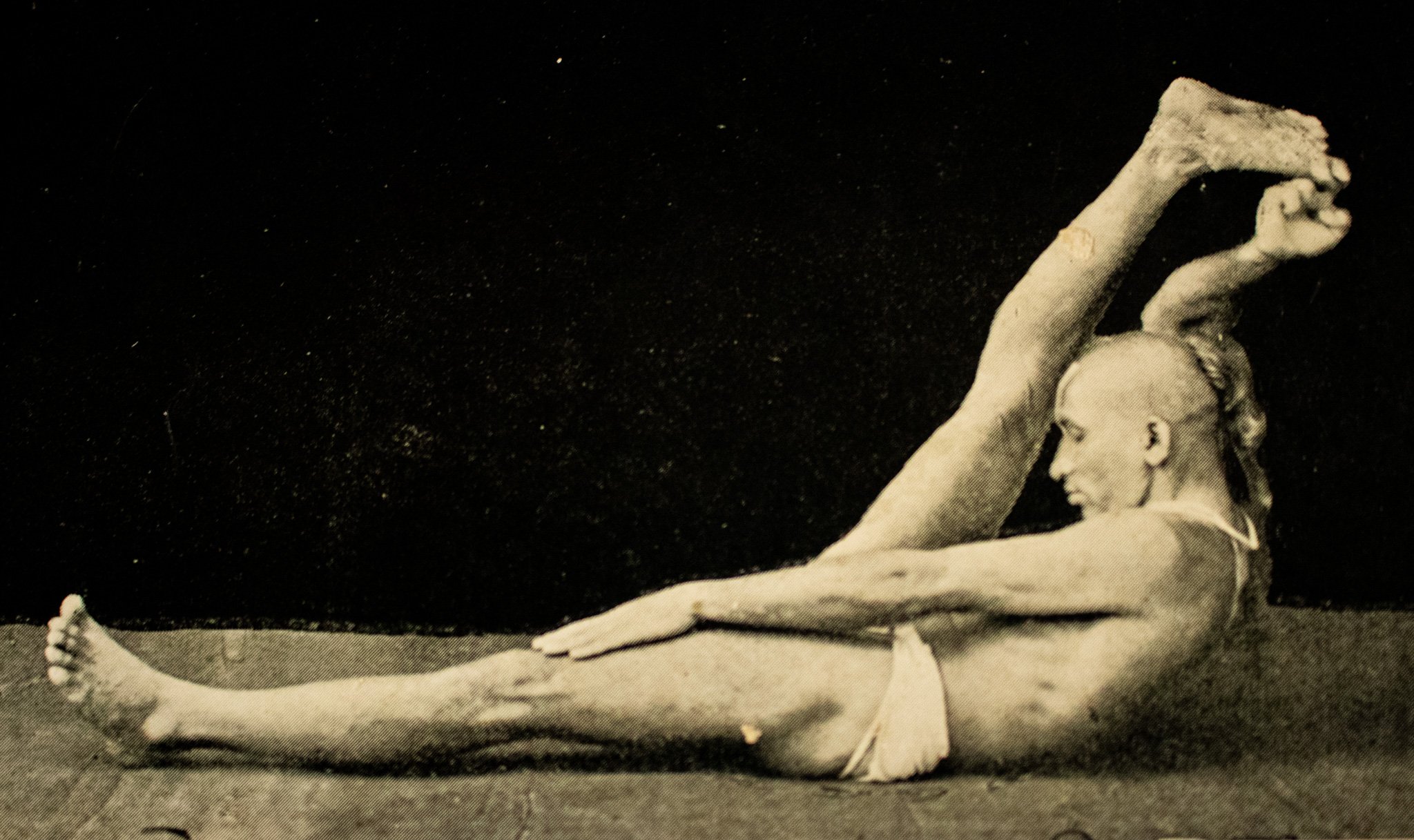
Who was
Sri Krishnamacharya?
There are many books about Sri Krishnamacharya. I will concentrate on aspects of his life which are not commonly known.
Sri Krishnamacharya: His Legacy and Spiritual Lineage
Sri Krishnamacharya is widely regarded as the father of modern yoga. When we examine yoga asanas practiced around the world today, it becomes evident that his teachings have influenced at least half of all postural yoga practices. Much has been written about the origins of the postures he taught. These accounts are readily available but often present conflicting ideas. The simple truth is that there is no definitive information about Rama Mohan Brahmacharya, the teacher from whom Krishnamacharya is said to have learned his asanas.
In popular yoga culture, the spiritual lineage of Sri Krishnamacharya is far less explored. Yet this aspect of his teaching is much more accessible, and there is much to uncover. Krishnamacharya was an Iyengar, with spiritual roots in Vishishtadvaita philosophy, and belonged to the Nathamuni Sampradāya tradition. All Iyengars can trace their ancestry to one of 74 priests appointed by the sage Ramanuja around a thousand years ago. Ramanuja was the founder of Vishishtadvaita philosophy. In this course, we will primarily learn from teachers within this lineage to gain the deepest possible insights.
Indian philosophy presents three principal schools of thought: Dvaita, Advaita, and Vishishtadvaita—commonly translated as Dualism, Non-dualism, and Qualified Non-dualism. Many philosophical texts contain multiple commentaries, each reflecting one of these perspectives. Over centuries, this has led to considerable divergence and occasional contradictions, as scholars have debated and discussed these viewpoints. To begin our study, we will explore these three philosophical perspectives. While they are fundamentally distinct, they also share certain points of common ground, providing a rich foundation for understanding Krishnamacharya’s teachings and their spiritual context.
Now, let’s get started! Below you will find three courses on the texts you will need to study. Absorb this information first then explore the texts on your own.
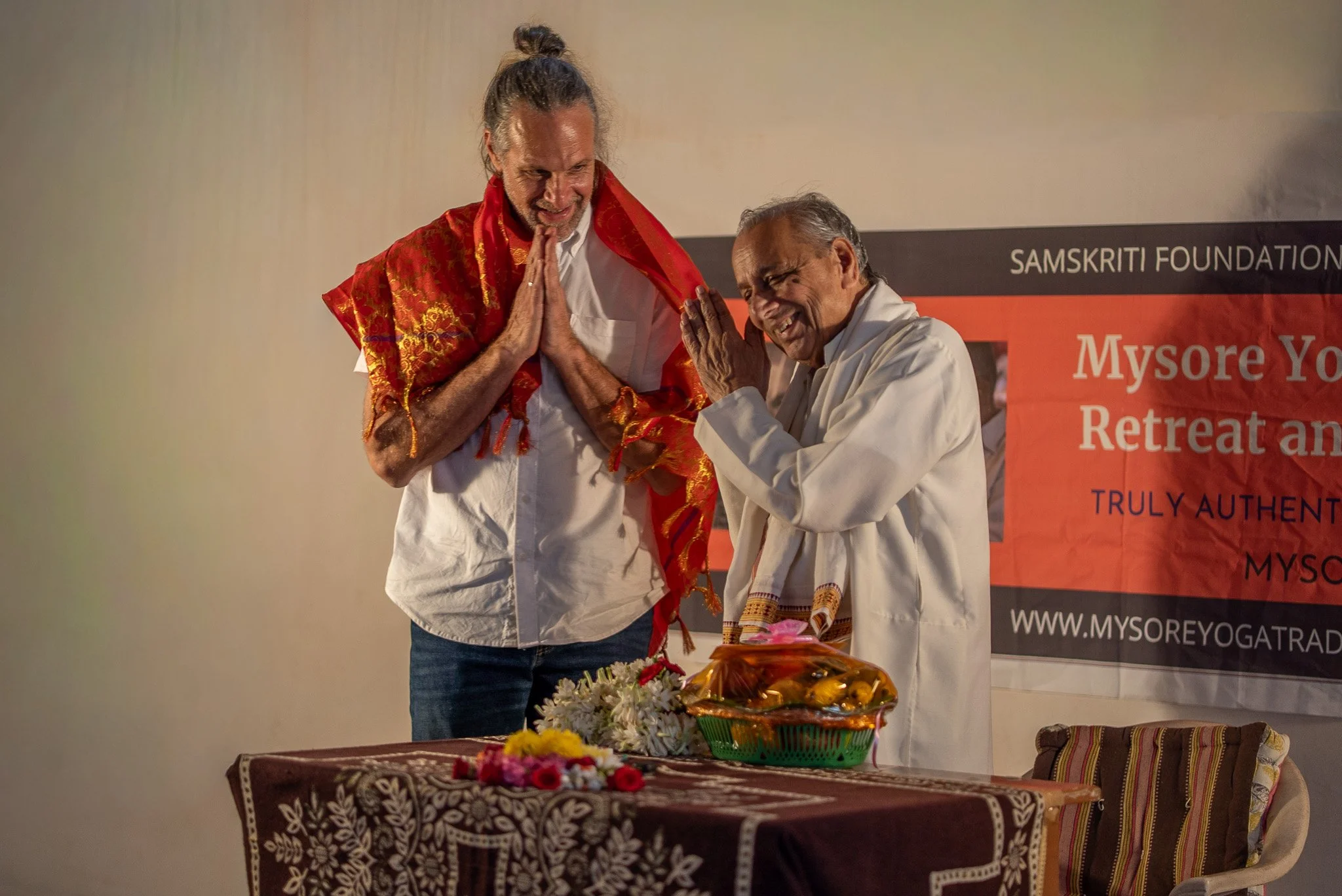
Dr. H. V. Nagaraj Rao
Vidwan Dr. H. V. Nagaraja Rao is a deeply respected Sanskrit scholar, celebrated for his mastery of grammar, poetics, and Indian philosophy, and for his rare gift of making profound texts clear, vivid, and accessible in English. Honored internationally for his scholarship and translation work, he continues even in his 80s to inspire students with his clarity, wit, compassion, and luminous teaching of texts such as the Sankhya Karika, and Yoga Sutras.
Sankhya Karika
The Sāṅkhya Kārikā, elucidated here through Dr. H. V. Nagaraja Rao’s precise and accessible commentary, is the cornerstone of India’s analytical spirituality: a succinct 5th-century primer that maps the twenty-five tattvas, the triadic interplay of the guṇas, and the liberating distinction between puruṣa (pure consciousness) and prakṛti (primordial nature). Every major Indian tradition—whether aiming to harmonize with it, as in Patañjali’s Yoga Sūtras and the Bhagavad Gītā, or to refute it, as in the Brahma Sūtras—takes the Kārikā as its indispensable point of reference. By laying out the epistemology, cosmology, and psychology that undergird later Vedānta, Yoga, Tantra, and even Buddhist debates, it supplies the philosophic scaffolding on which subsequent systems build their soteriologies. Incorporating this text into a 200-hour training curriculum therefore equips students with a rigorous framework for understanding how all later teachings—practical or devotional—presume, echo, or contest Sāṅkhya’s rational vision of bondage and kaivalya (absolute freedom).
Did you enjoy the Sankhya Karika? If you are short on time you should at least read through the notes to get the jist of the content. Now you will have a basic idea of the foundations of Yoga Philosophy. The terms and concepts spoken of there are repeated in Yoga. In fact most Indian texts and knowledge systems refer to Sankhya at some stage because it lays down a universal framework and it is said to be the oldest of the classical Indian philosophies.
And now…click the Patanjali Sutras button to go much deeper into the philosophy of yoga.

Dr. M. A. Alwar
Sri Alwar is the Acharya of Nathamuni Sampradaya, the President of Samskriti Foundation, and the Organiser of Mysore Yoga Conference
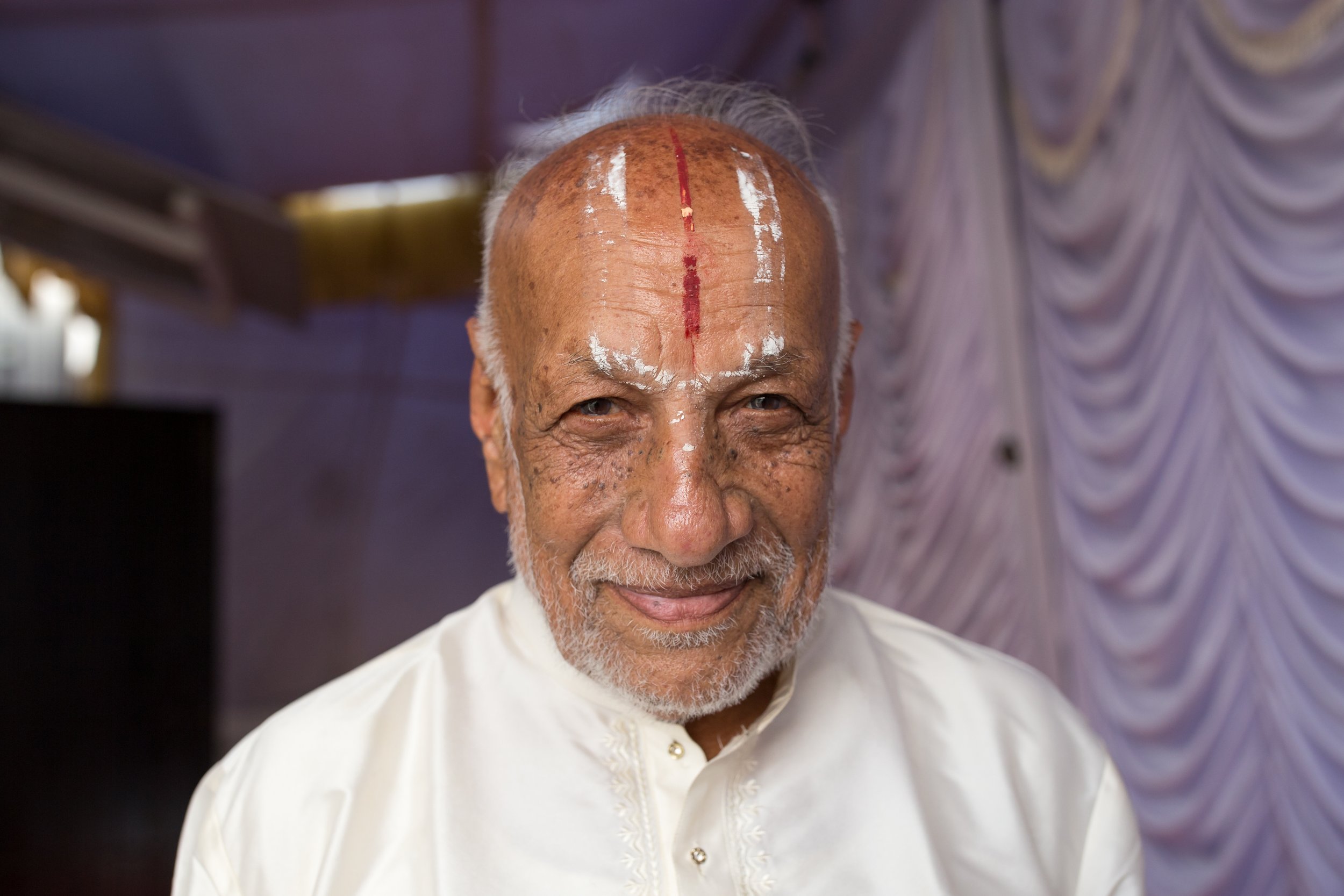
Shet Darshanas with Sri Lakshmithathacharya Swami
Sri Lakshmithathacharya Swami was the Acharya of Nathamuni Sampradaya until he reached his final samadhi in May of 2021. He was my teacher and I loved him very much. His passing was sorely grieved in Mysore and many places around India and the world. Sri Lakshmithathachar was a legendary scholar, thinker, scientist and a great proponent of Vedic culture. when you add up all his publications and the projects he oversaw as well as the experiments he conducted, and the extreme diversity of what he did in his life, it is very impressive. He permanently changed my world view and understanding of spirituality and God. He was a great yogi. When I met him I got goosebumps. I didn’t really know who he was until after he passed away. He made time for me despite being very busy and having so many responsibilities. I remember him saying one day “If I take the time to teach you this, you must never forget it as long as you live.” He was one of the great Rishis of Mysore and when one is fortunate enough to spend time with such a person it leaves a huge impression. He left many gifts behind. The greatest of which is his eldest son, Sri Alwar who has been trained for his entire life to step into the role of Acharya and who has assumed that role with grace and poise. I have come to know that they are in fact the last unbroken lineage of the Iyengars. This means that they have kept their tradition alive, passing it down uninterrupted from father to son, for the last thousand years since the time of Ramanuja.
To read the profound history of this lineage and the stories of all the important Acharyas going back to the time of Ramanuja and before click the button below. This is the real Mysore Yoga Parampara that everyone imagined must exist somehow but never knew about.
We will begin with the Shet Darshanas, or six orthodox Indian philosophies. Who could possible be better to explain these things? What you will experience here is the masterful teaching of a seasoned spiritual leader who had a lifetime of experience. He always said the spirit moved through him and that it was not even his teaching.
Yoga is one of these six orthodox philosophies. In order to understand Yoga one needs to have a basic understanding of the other five philosophies, particularly Sankhya which is a sister system to Yoga. All of these six philosophies play a role in Indian thought and they build upon each other. There is a lot of cross reference which is missed entirely if one is not familiar with them. What you will get from watching the videos of the Shet Darshanas is not only a basic idea of what the Shet Darshanas are but how they are seen and understood in the yogic tradition that Sri Krishnamacharya came from which is Nathamuni Sampradaya.
Each darshana is a huge body of knowledge. However there are certain basic concepts that are used again and again in explaining all philosophy.
Vaisheshika Philosophy
Vaisheshika Philosophy deals with the nature of perception. Kanada Kashyapa is the author of this school of philosophy. One common point often raised among the scholars in Mysore is that while western science would say matter of factly that light travels into the retina, refracts on the optic nerve and the brain interprets the things we see, Vaisheshika philosophy sees it differently. The mechanism of the eye is not argued here, what is debated is the nature of perception regarding one’s attention. We see many things that we do not notice. We hear many things that we do not listen to. Similar to the eyes, science would say that sound waves are traveling into the ears and because of this we hear. Everything is coming from the outside into us from this scientific or medical perspective. Vaisheshika philosophy views it in the opposite way. It states that perception emanates from within and scans the world around for input. It mentions a kind of primordial attention which activates the sense organs when we direct it there. If we are watching we see. If we are listening we hear. Has someone not told us something important at one time or other that we could hear perfectly well but didn’t get it because we weren’t listening? Awareness starts inside and travels outward according to Vaisheshika philosophy, not the other way around. From that point of view, the things we see are very much influenced by our state of mind and perspective, intention and what we are looking for. While western science insists that things are as they are and must be proven, Indian philosophy states that the conclusions arrived at depend on the perspective of the observer, even if they are conducted with double blind experiments and scientific research etc.
Nyaya Philosophy
Nyaya is known as “logic”. Gautama is the author of Nyaya philosophy. This philosophy talks about with how we know the things we know. If a person were to ask “how do you know you know?” it is not a simple question to answer. Pramana is the Sanskrit word for the means of knowing something. Philosophical debate is a huge part of Indian Philosophy. There are philosophies which believe is god and philosophies which do not, there are countless ways of interpreting the nature of consciousness and the ultimate goals of life. Nyaya teaches, among other things, the skill of debate and how to prove that your point of view is correct. All of the scholars in Nathamuni Sampradaya have a background in Nyaya philosophy. Sri Lakshmithathacharya’s son Sri Alwar holds a PHD in Nyaya philosophy and has taught it for many years at the Maharaja’s Sanskrit College in Mysore. Indian philosophy is often taught through metaphors involving every day actions and situations. It rests upon obvious and concrete ideas that relate to our everyday lives. This method of teaching and making philosophical points stems from Nyaya philosophy. Nearly every scholar in Mysore makes use of this style of teaching.
Sankhya Philosophy
Sankhya is very closely related to Yoga. Vaishashika and Nyaya can be looked at as a pair, and Sankhya and Yoga form a second pair. Sankhya is a way of looking a the world. The word darshan in Sanskrit implies a “view”. A view or life or reality. While they all play a role in understanding Indian thought, Sankhya is particularly useful in understanding the world view put forth in Yoga Philosophy. The primary principles in Sankhya are Prakriti and Purusha. Matter and consciousness. It deals with the illusory nature of the material world and the discernment between what is permanent and what is transitory. Put very simply, Sankhya says “you are not this body which is constantly changing, you are an eternal soul having an experience in this body.” Understanding this and incorporating it into our world view is said to relieve some of the suffering that human beings inevitably endure in life.
Yoga Philosophy
Yoga is a word that is known across the globe. Yoga means many different things to many people. It has been debated about for centuries and continues to be debated today. Pathanjali is the author of this philosophy. He added a new term which did not exist in the previous philosophy of Sankhya. Chitta. Yogas Chitta Vrtti Narodaha as the second verse famously states. “Yoga is the control of the fluctuations of the mind.” Chitta is a new and important concept here. Yoga has a very distinct meaning and way of looking at the world. Yoga is often a term that is thrown around loosely and which seems to mean whatever we want it to. This is a kind of western universalist thinking that often distorts the true meaning of yoga. Yoga has a defined and clear meaning which serious yoga practitioners try to should understand. The truth is that because we have no equivalent words in any language for many Sanskrit words it, takes a long time for us to catch the real meaning of many terms. I have heard hour long lectures just on the word Chitta! Sri Lashmithathacharya Swami will talk yoga in its classical sense here and give us an idea of what yoga looks like through his eyes.
Mimamsa Philosophy
Jaimini is the author of Mimamsa philosophy. The word Mimamsa can be translated as reflection, consideration, profound thought, investigation, examination, discussion. Mimamsa gives the rules for interpreting the Vedas. It is divided in two categories, Purva Mimamsa and Uttara Mimamsa. Basically earlier and later reflections. Most foreign yoga practitioners will know very little about this branch of philosophy. Mimamsa contains the essence of the ceremonies, known as Puja or Yagya which play a central role in Indian culture. It also speaks about what is known today as the caste system. In its original concept, this philosophy simply states that all things fit into four categories, however the application of the caste system has been the subject of much debate. In this lecture Sri Lakshmithathachar will speak on both Purva and Uttara Mimamsa to complete our exploration of the Shet Darshanas.
Patanjali puts forth the practice of Svadyaya. In its original context it simply means to read or study the Vedas. In more modern thought it means study of the truths of life. It is not a matter of blindly accepting anyone else’s ideas. We should take it all philosophical ideas and study them through our own logic and experience. Only in this way do they become real for us and begin to shape our view of the world.
Bhagavad Gita
This is the nearest text to the heart of the Mysore Yoga Tradition. Bhagavad Gita is much more influential in the culture than Patanjali Sutras and for this reason we will explore it after having studied the basics so we have a better chance to understand it. When we look at the original syllabus that Pattabhi Jois have to his students we can see that the Bhagavad Gita was given last. When we read a text such as the Bhagavad Gita on our own, we see it through the lens of our own experience and culture. We grab hold of the ideas we can relate to and have a context for and we miss many other aspects which we aren’t quite ready for. When the Gita is explained by a senior scholar it is a completely different experience. This text is deeply imbedded into the fabric of Indian culture. It’s influence can be seen in the attitude towards life and behavior of all the great scholars. The Bhagavad Gita is the single most popular Indian philosophical text and has been translated into dozens of languages. Like all great scriptures it can be studied for one’s entire life. Indeed many of the scholars in Mysore have memorized all 700 verses and recall them with astounding accuracy.
You’re about to enter our Gītārtha Saṅgraha course with Dr. M. A. Alwar (Sri Alwar), continuing the lineage of Sri Lakshmithathachar. Gītārtha Saṅgraha—Yāmunācārya’s 32-verse summary of the Bhagavad Gītā—offers a concise foundation for the Nāthamuni Sampradāya. Inside, each lesson includes a clear video lecture, streaming-only audio for review, and written notes to anchor key ideas. You can join this course live in the MYT Online Studies Program if you want to. When you’re ready, click through to begin the first lesson.
Swami Muktadananda was the head of the Ramakrishna Ashram at the time of this interview. He is a spiritual leader with huge responsibilities. I had never met someone like him before when we interviewed him. I can tell you for sure that not just anyone can be the head of a famous ashram! Swami Muktdananda has since left the ashram in Mysore. I was told he is one of their most inspirational swamis and the Ramakrishna order sends him wherever he is most needed to inspire and lift up a particular ashram. He is no ordinary man. He spends most of his time teaching philosophy to everyone from small children to PHD students. He is considered to be a living embodiment of Bhagavad Gita philosophy.
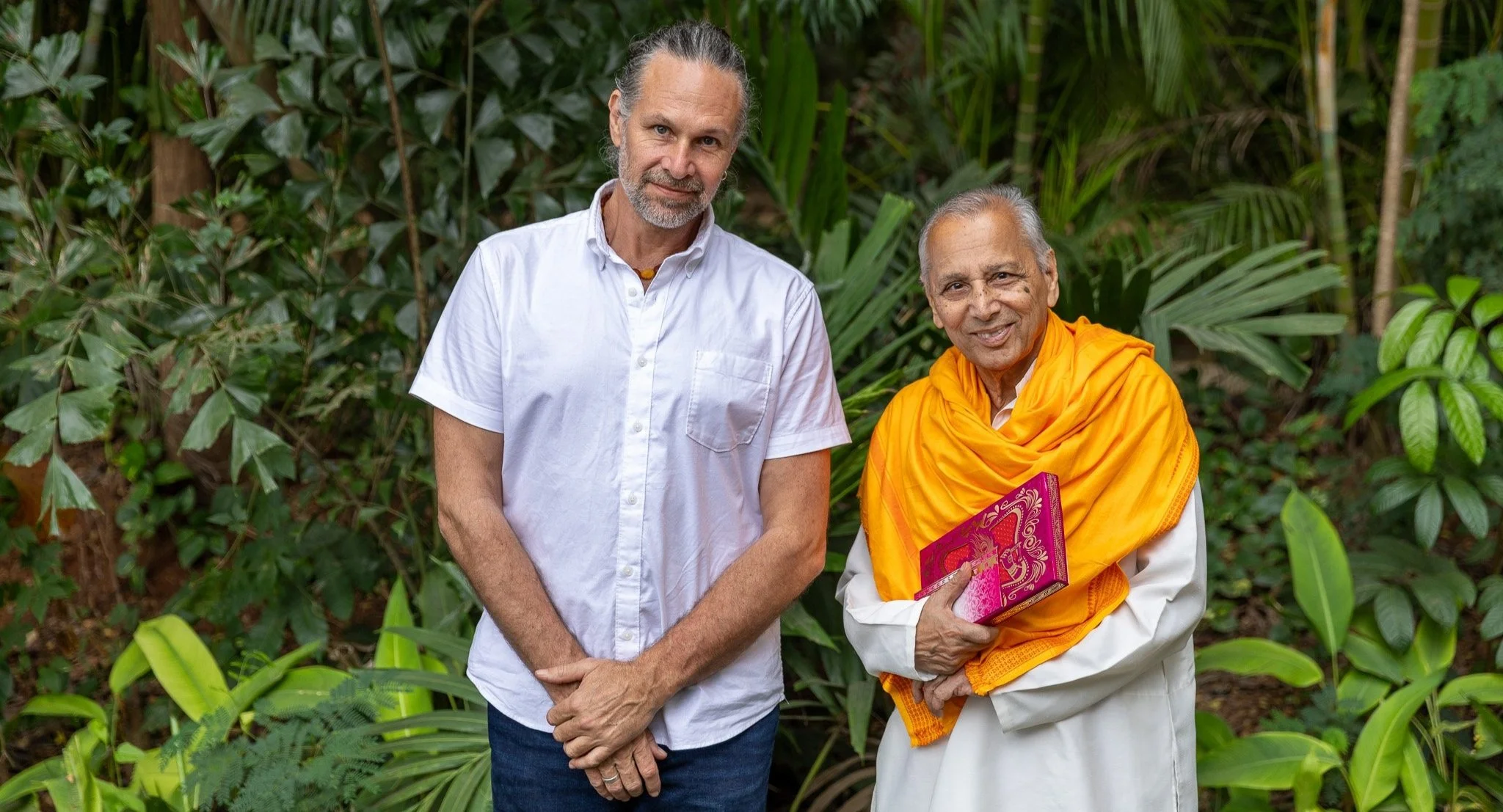
Dr. Rao is a wealth of knowledge! His teachings are deep and profound. Here is a course with Dr. Rao on Katha Upanishad. The Katha Upanishad presents a profound dialogue between the young seeker Nachiketa and Yama, the God of Death, delving into life's ultimate truths and the nature of existence. As a foundational text of Yoga philosophy, it explores the essence of the self, the impermanence of the physical world, and the transformative path toward spiritual liberation. Its timeless teachings inspire seekers to contemplate the nature of the soul, the importance of wisdom, and the pursuit of dharma. If you ever wondered how yoga philosophy deals with death, this course will take you on a beautiful journey!
Patañjali’s Sūtras
The Patañjali Sūtras provide the classical definition of yoga. Written approximately a thousand years after the Bhagavad Gītā, the origins of the Sūtras remain somewhat mysterious. Scholars debate the exact period in which Patañjali lived, whether the text was authored by a single individual or a group, and whether it was an original composition or a compilation of earlier teachings. Most academics place the Sūtras around 400–500 CE.
The concept of citta is introduced in the Yoga Sūtras as a central focus. The well-known aphorism yogaś citta-vṛtti-nirodhaḥ (Yoga is the cessation of the fluctuations of the mind) is the first concrete philosophical statement in the text, appearing in the second verse. The first verse simply announces: “Now, the exposition of yoga.” Interestingly, citta does not appear in Sāṅkhya philosophy, as Gangadhar Bhat clearly points out. Yoga presents a distinct way of understanding the mind. It is often described as an ancient psychotherapy manual, outlining how we perceive the world and offering practical steps for mental discipline and clarity. The eight limbs of yoga—aṣṭāṅga yoga—originate in this text. In a sense, the Sūtras offer a structured system for practice, while the Gītā provides a perspective or attitude toward life and action.
Philosophy is grounded in direct experience and one’s view of life; religion, on the other hand, is rooted in faith. To study philosophy well, we must set aside our judgments and genuinely try to understand the worldview being presented. The darśana (perspective) of yoga is distinct and profound. It is not shaped by what we wish it to be; it is what it is.
As practitioners of yoga, we should take the time to understand how yoga differs from other philosophies. Yoga accepts the Godhead in a universal sense, using terms like Īśvara and Brahman. These are not personalized deities, but rather vast, all-encompassing principles—without form, yet containing all forms. From this perspective, there is no need to change our religious background or adopt a new form of God; we can simply deepen our contemplation of the divine as we already understand it. These philosophies suggest only that the divine principle must be contemplated. For those who don’t relate to God in a personal form, the path of Self-realization is equally valid.
As mentioned earlier, it is essential to understand that most Sanskrit words represent unique concepts that do not have direct equivalents in other languages. They require time, study, and exposure to diverse interpretations to be fully grasped. Indian philosophy is not monolithic; it encompasses many schools of thought, each offering insights into the human condition. These timeless teachings are applicable in every culture and life situation. They are rooted in logic, reason, and direct perception—not in blind belief.
There is an ongoing academic debate about whether the Patañjali Sūtras were influenced by Buddhist scholars. Personally, I do not subscribe to this view, though it remains a possibility. Hinduism predates Buddhism, and the two traditions have engaged in philosophical debate for centuries. Buddhism and Advaita Vedānta do share common ground. The core distinction is that Buddhism does not posit a God, while Hindu philosophy often does. However, it’s not necessary to take sides in these debates to practice yoga meaningfully. Most Indian scholars acknowledge that while there may be Buddhist influence in the Sūtras, it is not a Buddhist text.
Dr. M. Jayaraman gives an excellent lecture on the Vedic roots of the Patañjali Sūtras. Formerly the Director of Textual Research at the Krishnamacharya Yoga Mandiram in Chennai, he currently serves as Professor and Dean in the Division of Yoga and Spirituality at SVYASA Deemed University in Bangalore. In his lecture, Dr. Jayaraman outlines the vast landscape of Vedic literature and identifies where the Sūtras draw influence. He also beautifully conveys the true spirit of Patañjali’s work and offers a comprehensive and insightful overview.
This video is a rich source of education and well worth your time.
Patanjala Yoga is a favorite subject of Sri BNS Iyengar. In his unique and eccentric way he has introduced so many people to the core concepts of Indian philosophy.
Patanjali Sutras and Bhagavad Gita with Dr. Nagaraj Rao. Yes, he will go into the Gita once again.
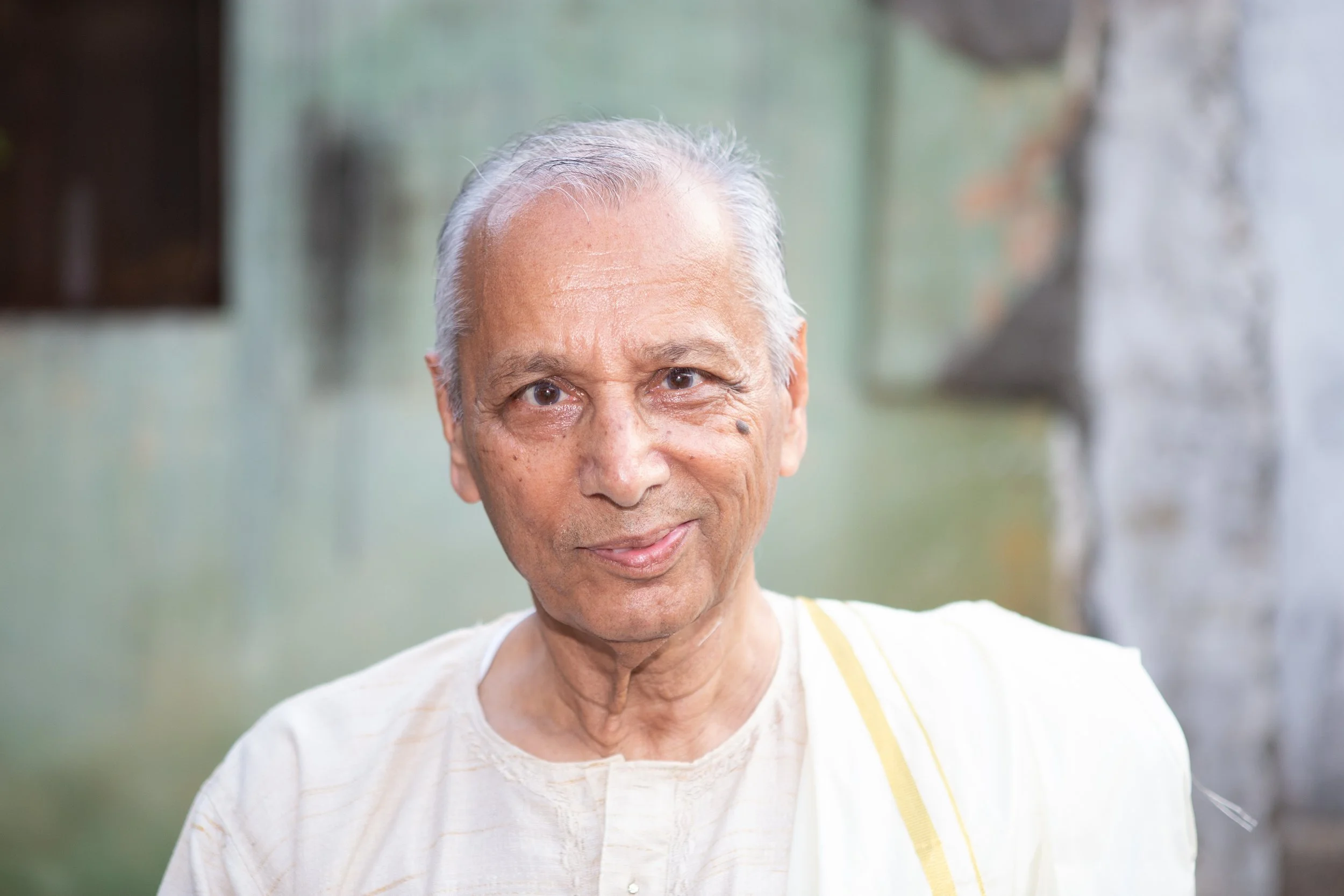
This will be a child’s attempt to explain the Yama’s and Niyamas. This classical piece of philosophy comes our differently for each person who speaks about it. I thought it would be good to share my own ideas about these things so that you can have the diversity of experience. In a way whatever little I know is a synthesis of the teaching of my teachers. I may not know so much but they are truly great.
This is a talk not only about the eight limbs but also the shet darshanas and where yoga sits within those. This is simply my experience with the different stages of yoga. Some of it is what I was taught and some of it is simply my opinion.
Background of Yoga in Mysore
The history of yoga in Mysore has been a contentious subject in the academic world. Much has been written and speculated upon by academics. And not all of the books published have been appreciated in Mysore. While a lot of good scholarship has been done, there remains much that we do not know. The people of Mysore can tell the story best in my opinion! After all it is their community and they grew up hearing about yoga. People like Sri Krishnamacharya and Pattabhi Jois are well known in Mysore. By listening to different accounts you can form your own ideas. Not everyone shares the same opinion of course. It is obvious in these interviews that they are not protecting anything or selling anything. They simply tell what they know. There is a fierce pride among the Sanskrit community of Mysore when it comes to the yoga legacy of Mysore. These videos will also include philosophy and you will recognise some clips from the original Mysore Yoga Traditions film.
Dr. Gangadhar Bhat is one of the senior Sanskrit scholars from the Maharaja’s Sanskrit College in Mysore. He was one of our favourite speakers and this interview covers a number of topics including the history of yoga in Mysore, the influence of foreign gymnastics in Sri Krishnamacharya’s yoga, and the origins of Suryanamaskar.
Dr. M. A. Jayashree and her brother Dr. M. A. Narasimhan are renowned teachers in Mysore. They have taught thousands of foreign yoga students to chant Patanjali Sutras, Bhagavad Gita and other classical Sanskrit prayers and scriptures over the last 20 years. This talk also covers a wide range of subjects including chanting of mantras, history of yogasana in Mysore, and stories of Sri Pattabhi Jois and the early western students of Ashtanga Yoga who began visiting Mysore in the 1970s. Here we can catch a glimpse of how foreign yoga practitioners were initially seen in Mysore.
Manju Jois is the son of Sri Pattabhi Jois. He is a very famous yoga teacher and certainly knows the history of how Ashtanga Yoga made its way into world culture. He was delightful to interview and very funny as well. Because he has lived in the United States for many years he has quite a different perspective than the people who live in Mysore. Manju expresses some strong opinions about asana practices here.
Dr. T. R. S Sharma was one of the early students of Sri Krishnamacharya in Mysore. He was a favourite student and in this video he tells about Sri Krishmacharya’s classes and approach to teaching postures and talks about some of his early experiences. He is one of the only living people who can say what it was like to study with Sri Krishnamacharya in Mysore during that period. Dr. Sharma also talks about his own understanding of Neuroscience and how our brains respond to yoga practice. At the age of 94 he is still vital and lucid. This man is nothing short of brilliant. He is a living testament to the longevity that yoga can create. He is a dear friend of mine and someone I have a great deal of admiration and respect for.
This Concludes Our History Section
The four videos above contain a great deal of philosophy, but they also explore the history of yoga in Mysore, offering a glimpse through the eyes of those who live there.
It’s fair to ask the question: “How old is the Primary Series of Ashtanga Yoga?” Here's what I’ve learned so far:
Śrī Krishnamacharya created vinyāsa. As Gangadhar Bhat notes, it’s not a word found in classical texts. The term can be broken down as viśeṣa-nyāsa—a special or particular arrangement. It’s a bit like the modern term “AcroYoga”: two separate words combined to create a new meaning.
Śrī Krishnamacharya used Sūryanamaskāra, and particularly Ṣaṣṭāṅga Namaskāra (a full prostration to the sun), as the foundation for his approach to āsana practice. Because Sūryanamaskāra is referenced in the Ṛg Veda, along with other hymns to Sūrya, it can be said—especially from an Indian cultural perspective—that this yoga is thousands of years old.
However, from a Western academic perspective, the questions arise: How old is the actual sequence of postures? Where did these specific poses come from? The answer: these exact sequences are not thousands of years old. Padmāsana and other postures used in ascetic practices are indeed ancient, and body-based spiritual disciplines go back a long way. But the Primary Series as we know it today is likely no more than 100 years old—probably closer to 80 years. At present, there is no solid evidence to suggest otherwise. Of course, that could always change with new discoveries.
Śrī Krishnamacharya created the system of vinyāsa, and Śrī Pattabhi Jois developed the Ashtanga series as we know them today. The original four series taught by Pattabhi Jois in the early 1970s in Mysore were based on a syllabus—specifically, a four-year curriculum for his yoga course at the Maharaja’s Sanskrit College.
Primary Series corresponded to the first year,
Intermediate Series to the second year, and so on.
I’ve seen that syllabus myself. It even includes prāṇāyāmas and reading materials—it’s not unlike any other academic syllabus you'd find in a college setting.
Then, of course, there’s the story of the Yoga Korunta, which we won’t dive into here. Like all great Indian teachers, neither Śrī Krishnamacharya nor Śrī Pattabhi Jois sought to take credit for their innovations. They attributed their teachings to their gurus and the traditions they came from.
Further thoughts and studies
One more lecture from Dr. Sharma! Dr. Sharma was educated in America as a Fulbright scholar in the 1940s I believe. He has a special kind of mind in a way because he has deep insight into both eastern and western culture. In the screen below you can see the famous picture of Sri Krishnamacharya standing on a small boy in Kapotasana. That boy was in fact Dr. Sharma! He loves to tell that story and it is a favorite memory for him which he treasures. This talk about Hatha Yoga and Raja Yoga ties together many things we have discussed previously. It also gives some keen insight into the cultural and intellectual differences between the East and West.
On the same subject of different thought processes and cultural interpretations between East and West, you will find Dr. Sharma’s talk of Human Emotions to be nothing short of brilliant!
Going Deeper
Do you feel more informed at this point? Do you feel that you now know something about yoga? I sincerely hope this course has contributed to your understanding.
The truth is, we are all still toddlers on this path—just at the beginning of the beginning! To truly grasp yoga philosophy, it’s essential to study Sāṅkhya philosophy in some depth. The terminology found in Sāṅkhya appears throughout all other Indian philosophical systems. It is the oldest of the six orthodox schools and forms the foundation for yoga, as well as several other traditions.
You have already had the opportunity to read a text which summarizes this course. by actually watching Dr. Rao speak you will get a much deeper experience and the information will stick in your mind. In this ten-lecture course with Dr. Nagaraj Rao, you will gain a fundamental understanding that will help you integrate everything you’ve learned so far. there is Video, Audio as well as weitten summaries for each video taken from my own notes.
In Conclusion
This course offers only a glimpse into Indian philosophy—we have just begun to scratch the surface. Over time, through continued study online or in person at the Mysore Yoga Conferences, these conversations deepen, and the scholars reveal more of their profound wisdom.
It is my hope that you have gained insight into the community that gave us Ashtanga Vinyāsa Yoga, and that you have appreciated their wit, charm, and humanity. For me, these elders embody the very spirit of yoga.
Death and impermanence are the only certainties in life. Indian philosophy arises from this recognition and guides us on a path of self-discovery, growth, and evolution. The big questions—about the Self, the nature of reality, the existence of God, and the purpose of life—remain open for each of us to explore. Ultimately, it is your understanding that matters. You are the captain of your own ship.
I suggest two guiding principles: svādhyāya (study) and abhyāsa (practice). Learn from the great thinkers, reflect deeply, and integrate what resonates. Growth and expansion should never cease. Rigidity of mind is weakness; clarity and adaptability are strength.
Let your yoga extend beyond āsana into a full-time practice of inner work. Daily discipline allows us to remain clear, luminous, and resilient, even amid life’s joys and challenges. As Śrī Krishnamacharya said, “Yoga is the replacing of old, inappropriate patterns with new and more appropriate patterns.” Yoga is available to anyone with the courage and determination to change patterns of thought, speech, emotion, or action.
Whether or not you believe in God, follow a particular religious tradition, or seek Self-realization without reference to divinity, the path of yoga is open to you. The outer world may pull at your attention, but the true answers reside within. Accessing that inner space—that is yoga.
Ashtanga Vinyāsa Yoga emerged from a community of extraordinary scholars in Mysore. If you have connected even partly with what was shared in this course, if you are committed to improving your life through yoga, then you are a traditional yogi. Listening, reflecting, and embodying these teachings brings the lineage to life in your own words, actions, and practice.
May this course inspire and guide you as you continue your journey.
I hope you enjoyed the course, Andrew
Feel free to reach out with comments and questions. andrew@ashtangayogastudio.com
Other Offerings*